
We Ran Out Of Water Twice. So We Installed A 130,000L Water Tank.
Here’s something I had absolutely no idea about before moving out of Melbourne: How much water we actually use. When you live in the city, water is just there. You turn on a tap, and it works. If you need more, there’s more.
Living on rainwater is a completely different story. Over the last few years at our cabin in Johanna, we’ve become very aware of exactly how much water our family uses because we’ve run out. Twice. That’s why one of the biggest priorities for our shed project wasn’t actually the shed itself. It was finally sorting out our water storage. Watch our complete journey from planning, prepping, right through to the glorious install of our Kingspan Water Tanks!
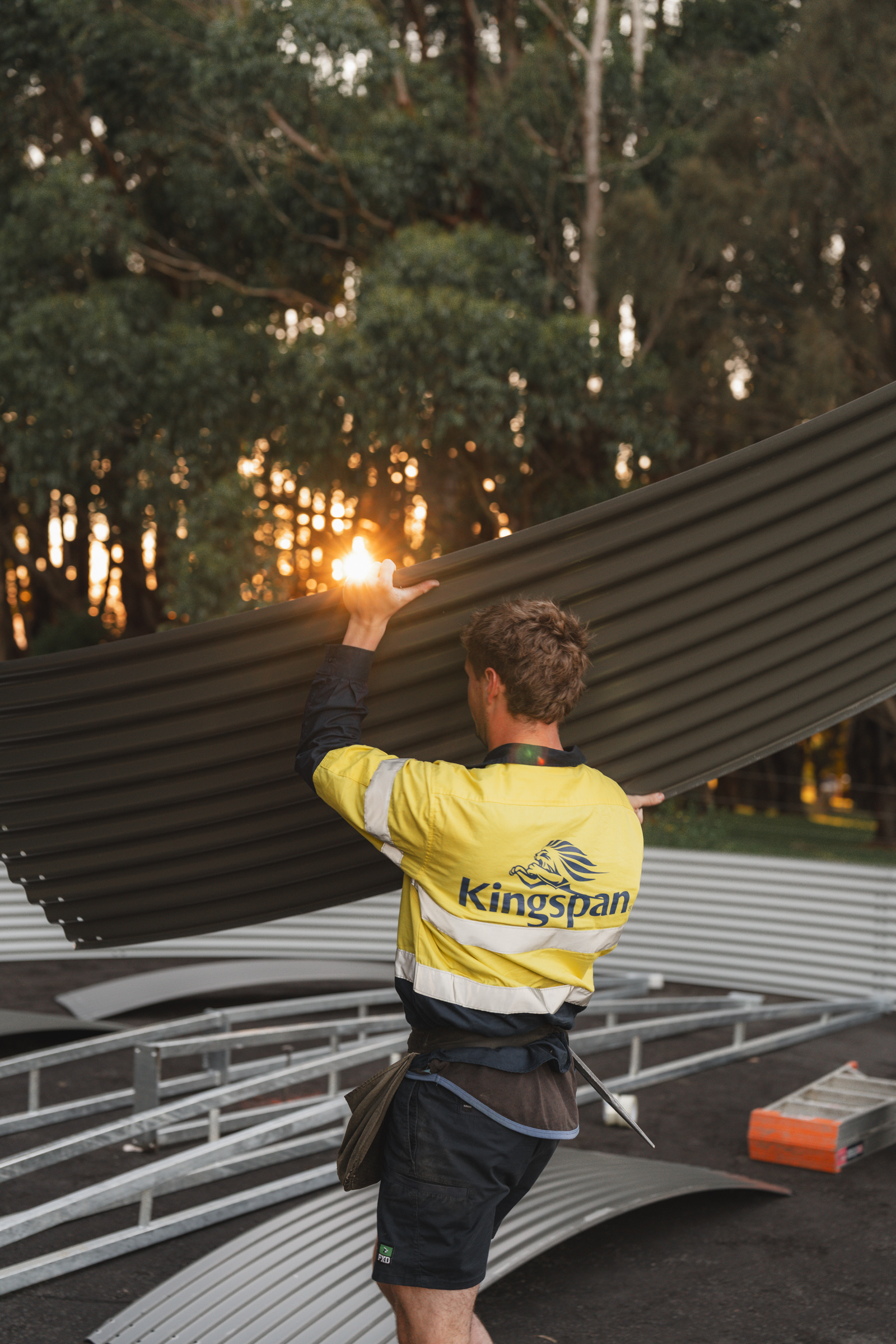
 Working Out How Much Water We Need
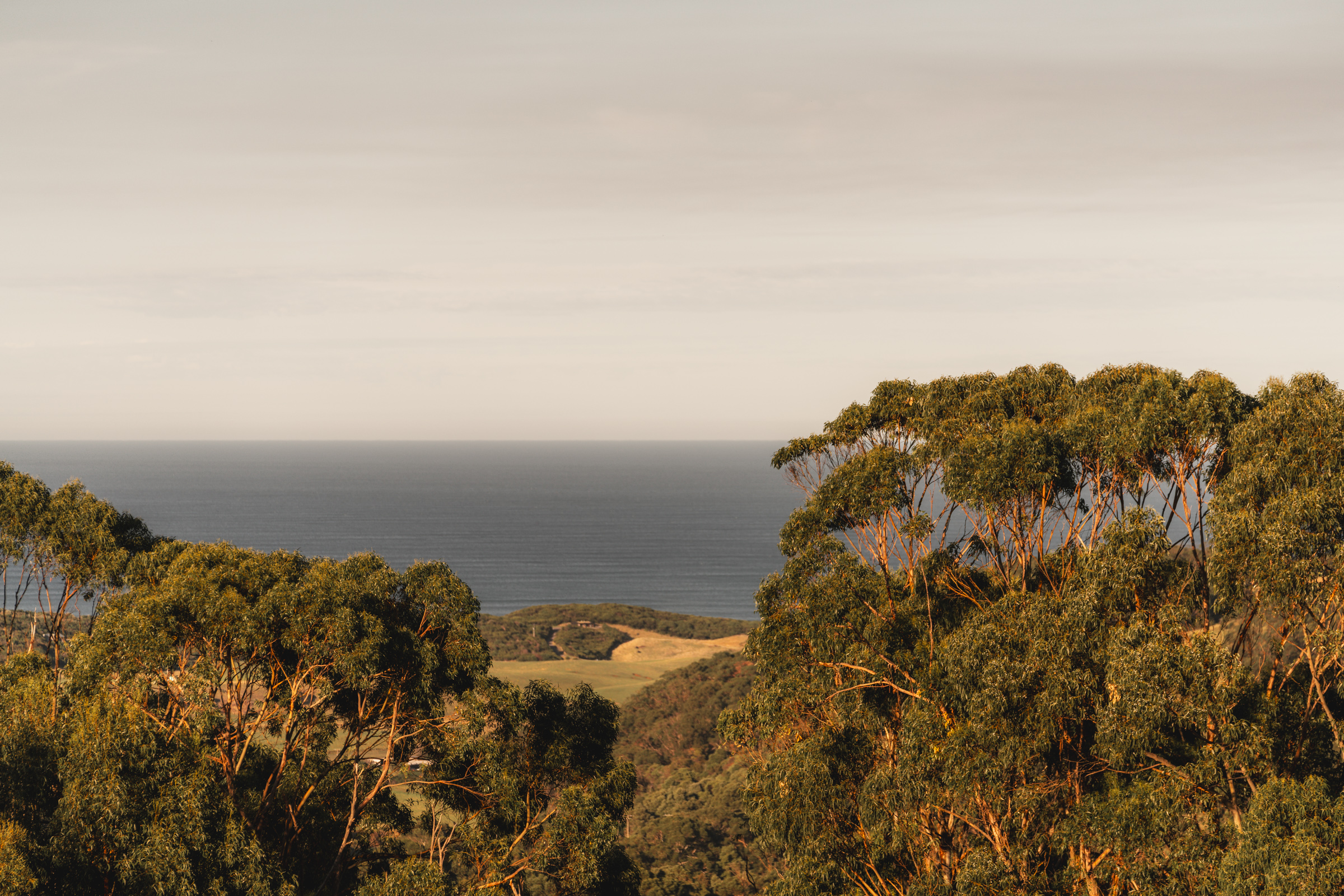 Working Out How Much Water We Need
Before choosing a tank, I wanted to understand two things.
- How much water we use.
- How much water we can realistically collect.
The average person uses around 150 litres of water per day. For our family of four, we estimate we will use roughly 450 litres every day, or about 13,500 litres every month. Once you start doing the math, you realise pretty quickly that water storage isn’t something you want to undersize.
At the same time, we had a brand new shed roof sitting there doing absolutely nothing. The shed roof is around 200 square metres and the garage adds another 36 square metres of catchment area. Based on our average annual rainfall of around 950mm, we should be able to collect more than 220,000 litres of water each year.
Suddenly, a bigger tank started making a lot of sense.
Why We Chose A 130,000L Tank
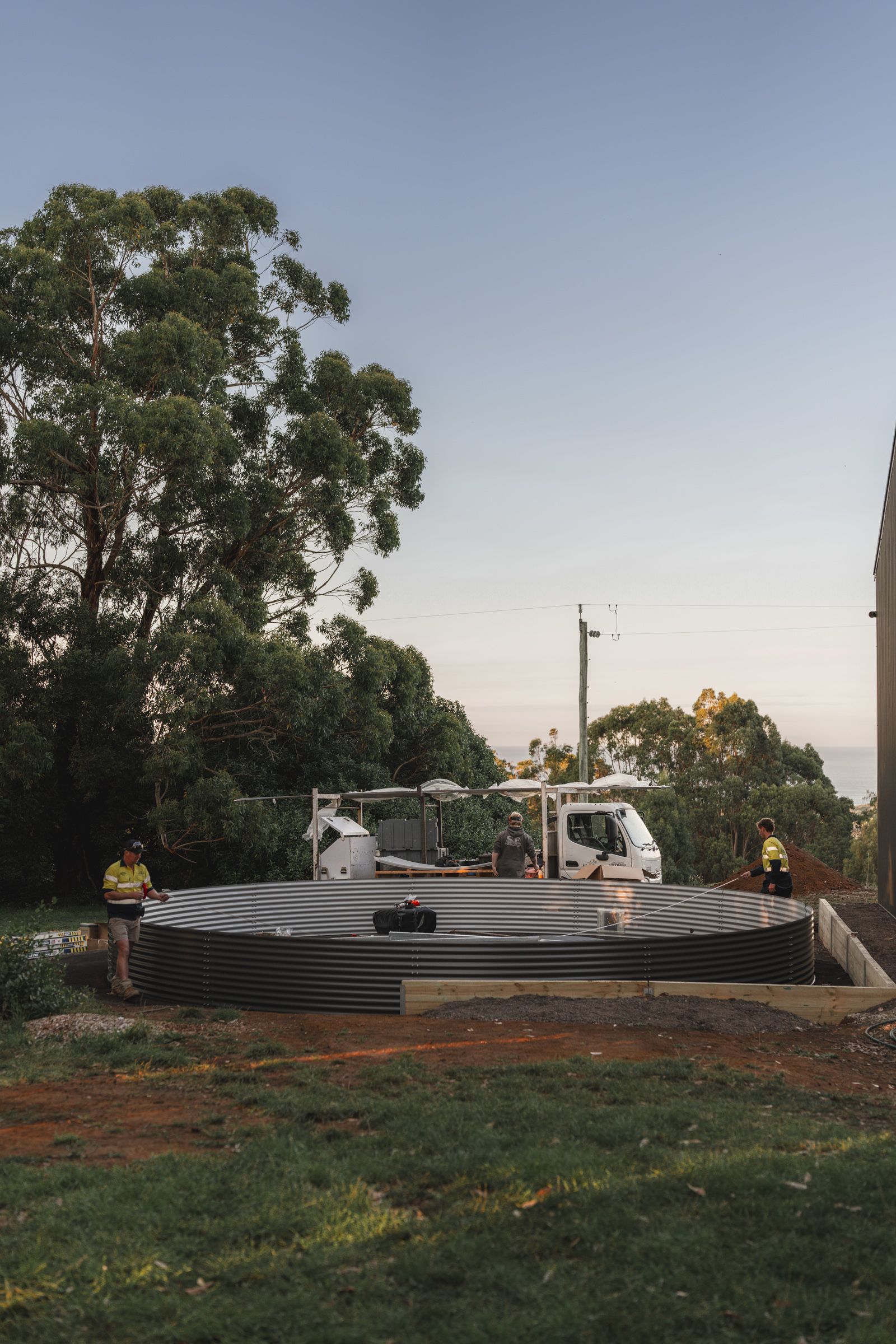 Why We Chose A 130,000L Tank
The goal wasn’t to store enough water for a few weeks. The goal was to stop thinking about water all the time.
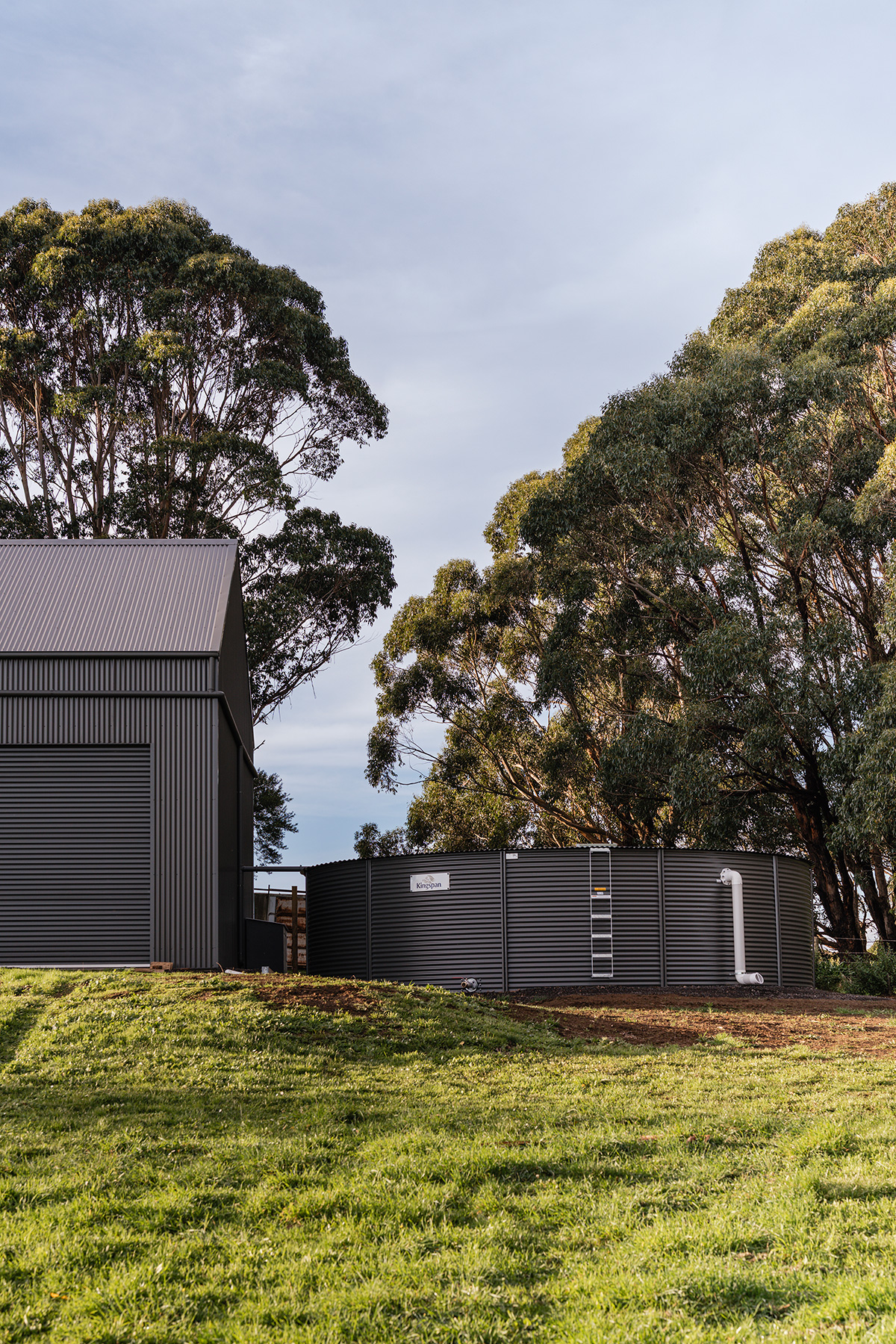
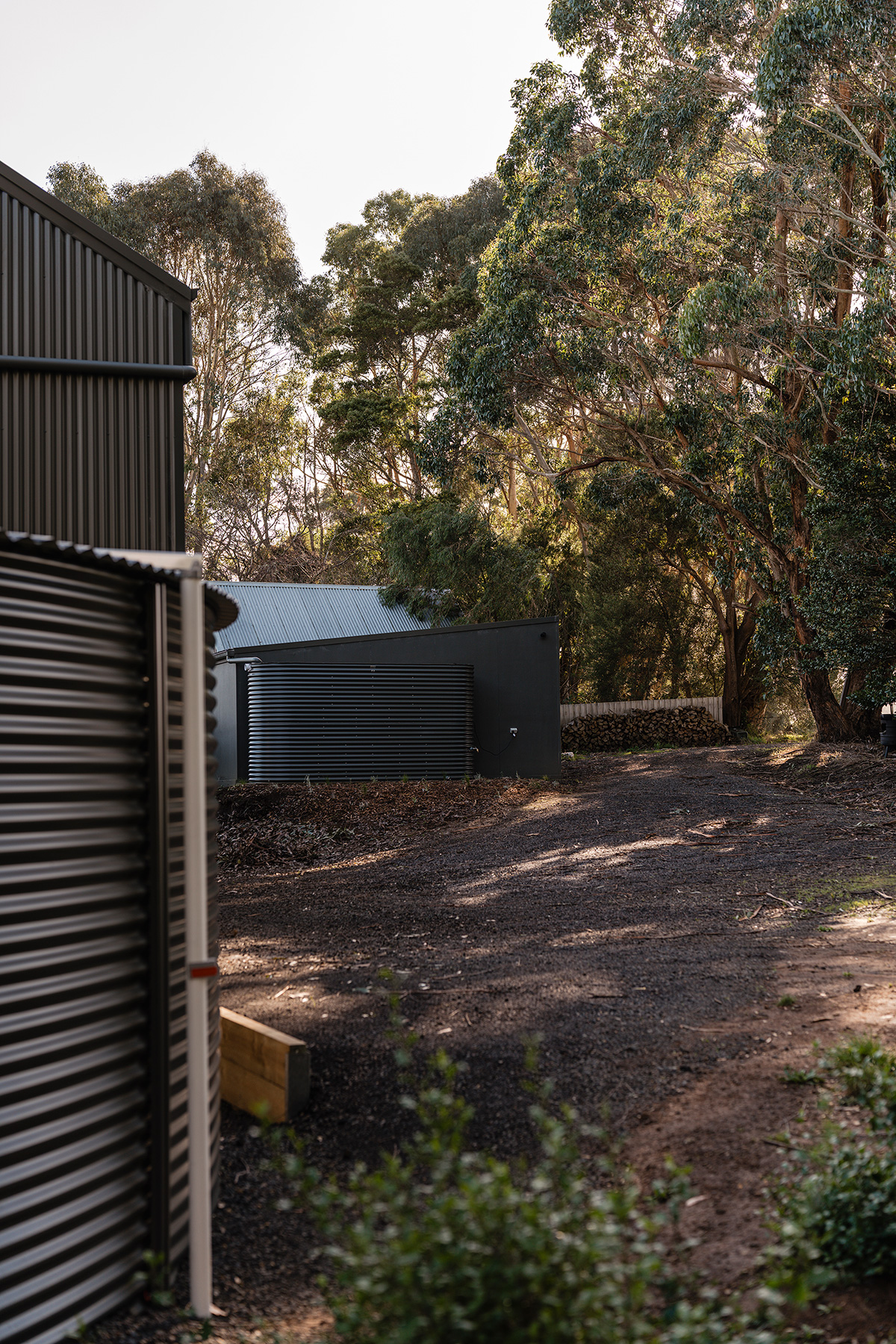
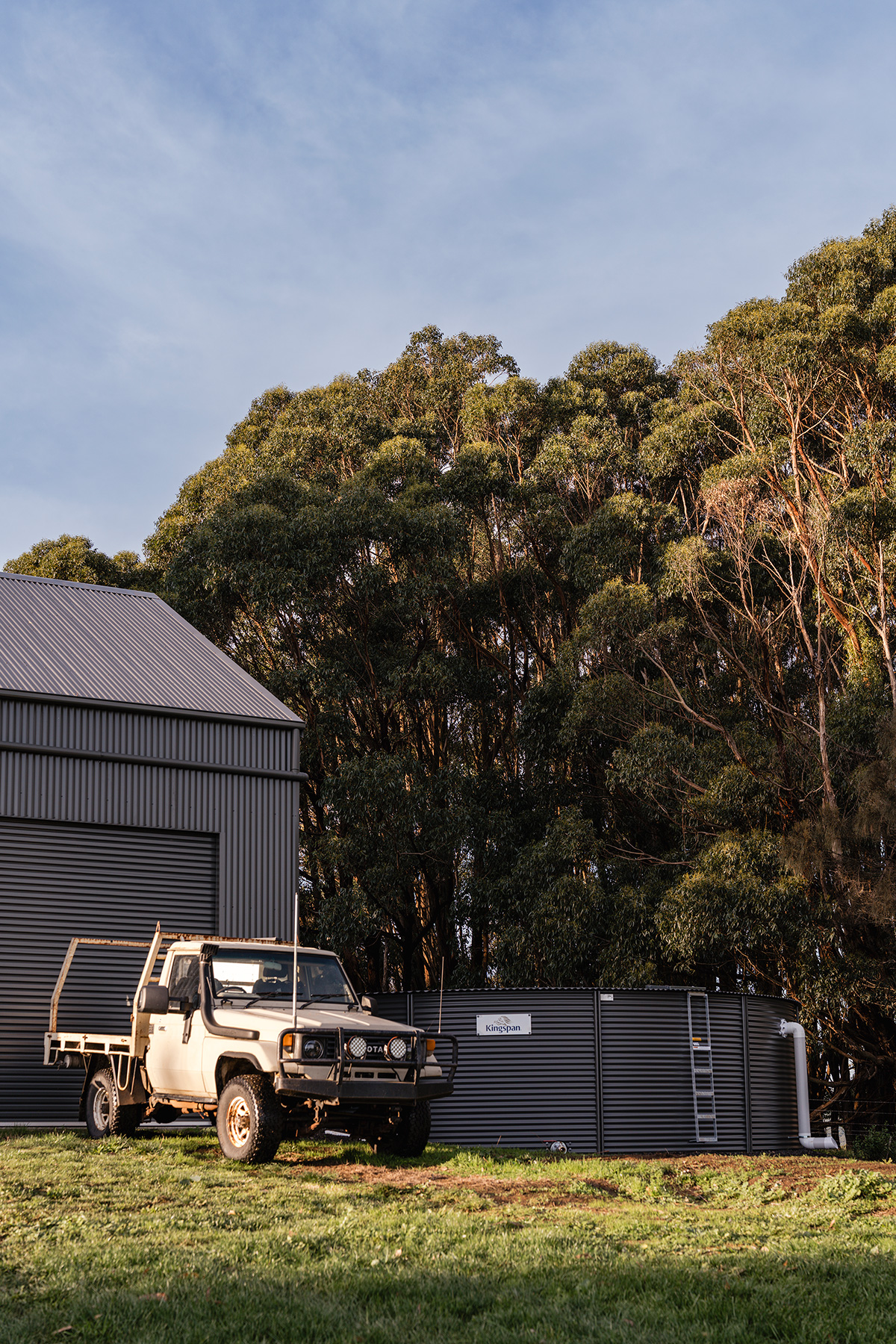
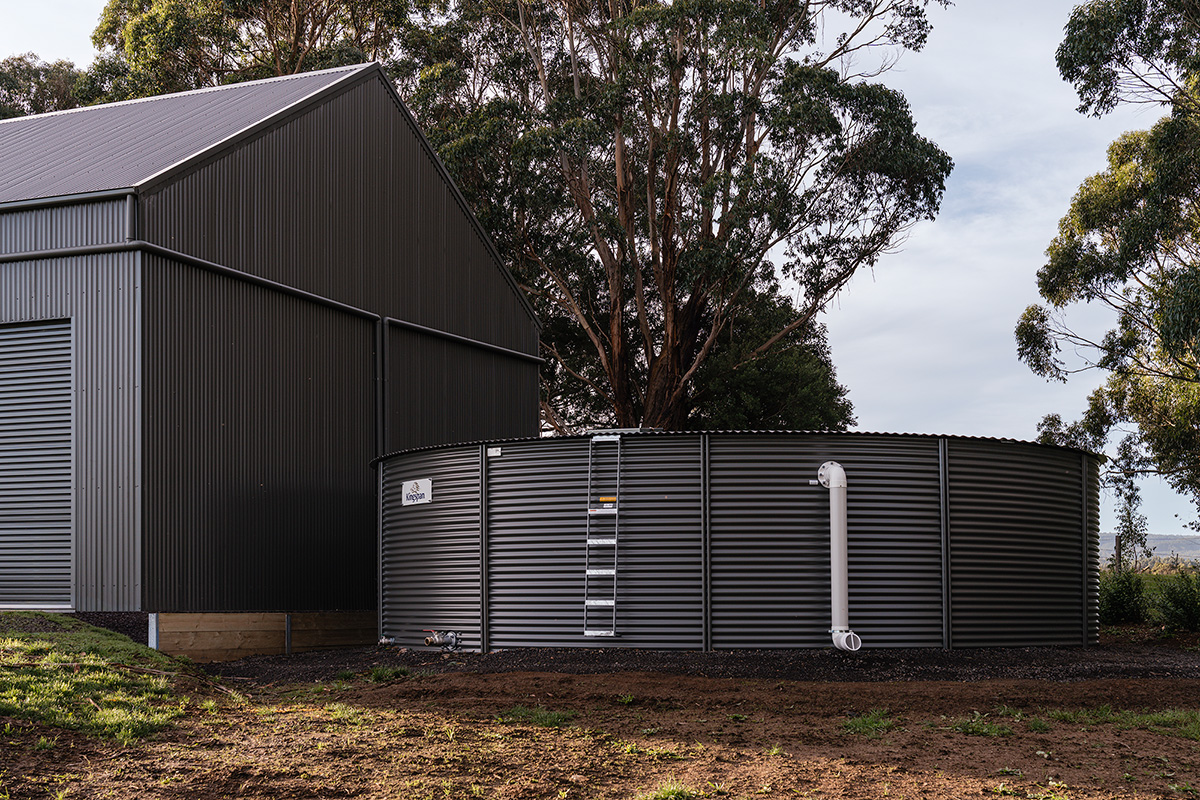
After running through the numbers, we landed on a 130,000L Kingspan Heritage tank beside the shed, along with a 8,500L slimline urban tank beside the garage.
Could we have gone smaller? Probably.
But after running out twice already, I’d much rather have too much storage than not enough. Particularly when we know there will be years where rainfall isn’t as generous as the averages suggest.
Function Is Important. But So Is How It Looks.
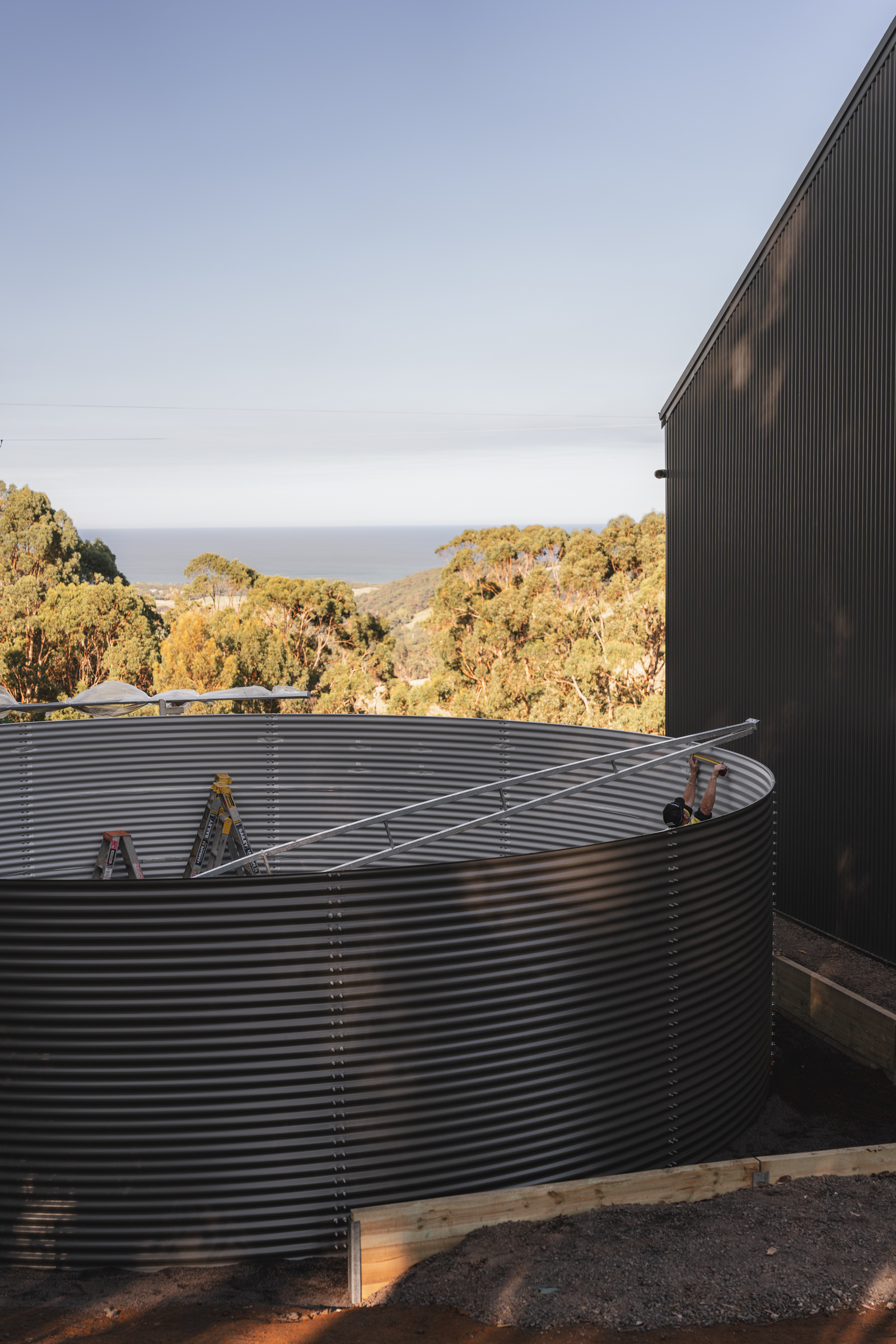 Function Is Important. But So Is How It Looks.
One thing I wasn’t willing to do was spend all this time getting the shed exactly how I wanted it, only to plonk a giant water tank next to it that looked completely out of place.
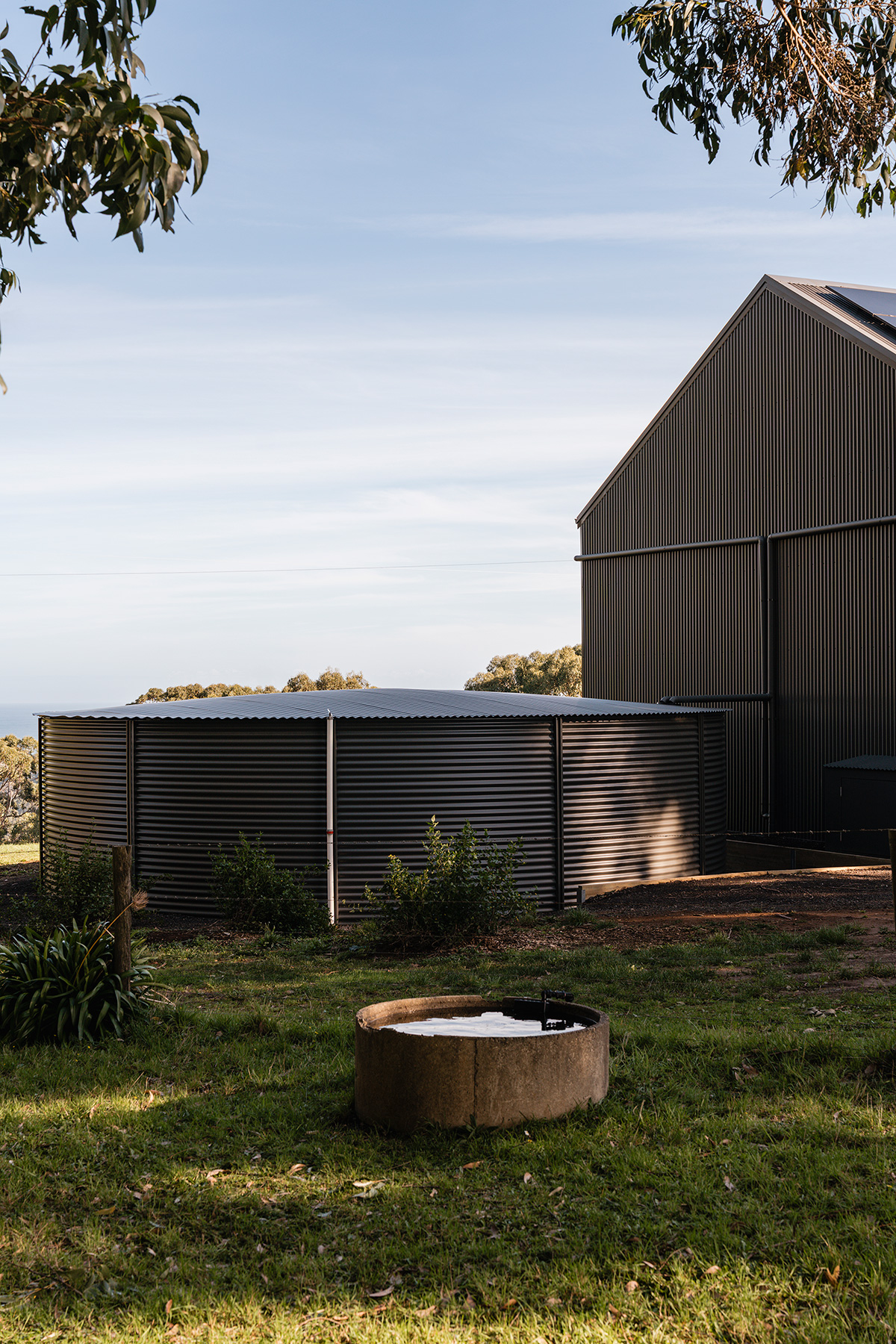
The shed is Woodland Grey. So the tank is Woodland Grey. The downpipes are Woodland Grey.
Everything is colour matched and designed to blend in rather than stand out. It’s still a very large tank. There’s no hiding that. But I think it sits really comfortably in the landscape and feels like part of the overall project rather than an afterthought.
The Part Nobody Sees
 The Part Nobody Sees
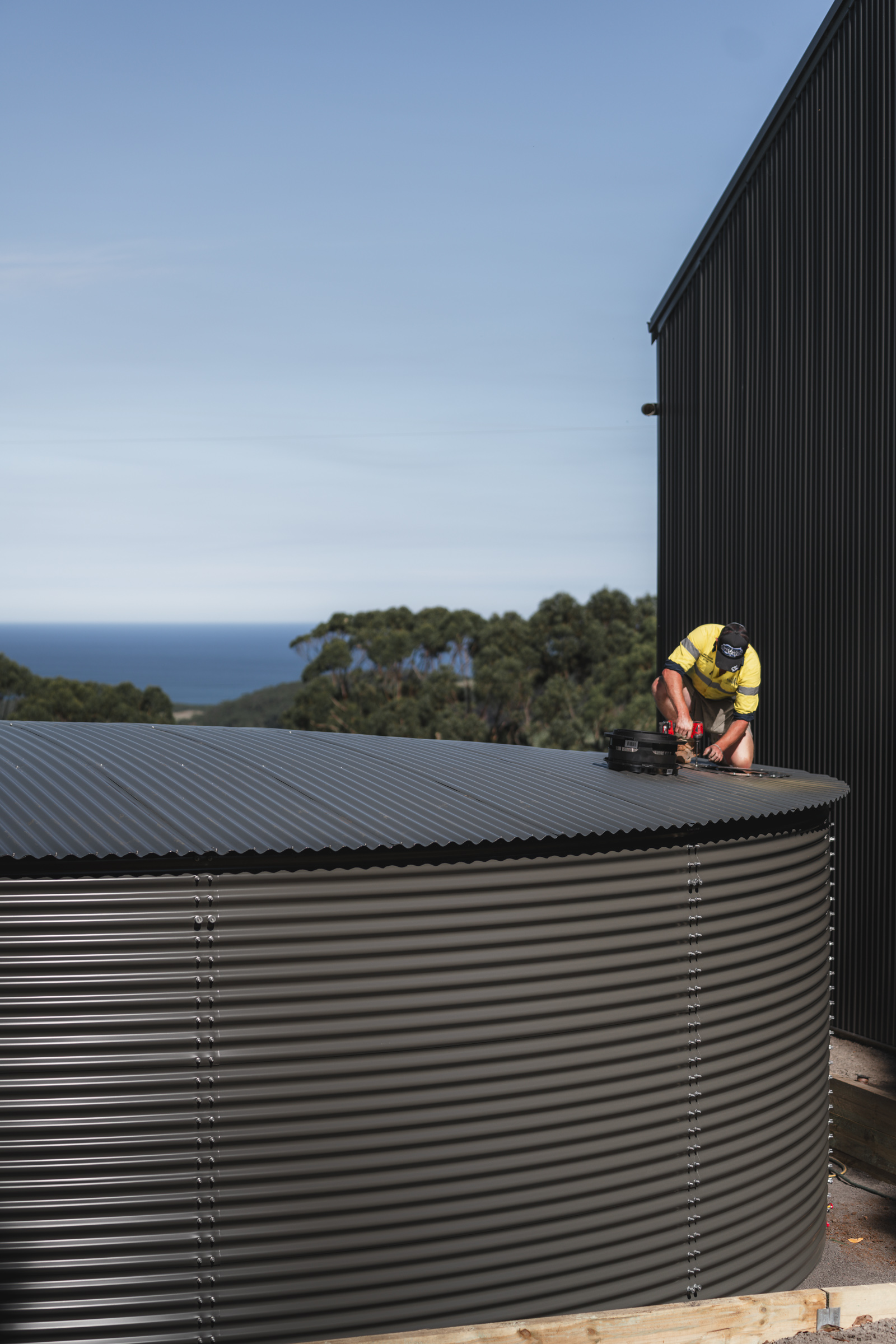
Like most projects, the installation itself was actually the easy part. The prep work took much longer.
Prep involved marking out the tank location, removing downpipes, cleaning gutters, preparing the site, bringing in crusher dust and building a compacted base capable of supporting a tank that will eventually weigh well over 130 tonnes when full.
The Kingspan crew arrived before sunrise and had the tank assembled before lunch, which was impressive. Also slightly frustrating because I’d spent weeks preparing for something that seemed to happen in a few hours.
Then The Rain Finally Arrived
The most satisfying part happened a few weeks later. We’d had a long stretch of dry weather and the tank was slowly collecting water. Then we got around 100mm of rain in just 24 hours. The water level jumped dramatically. All of a sudden the tank was sitting around half full, and for the first time in a long time it felt like we’d actually solved one of the biggest problems on the property.
It’s still early days. The system isn’t fully connected back into the house yet and there’s more work to do with pumps, filters and plumbing. But the hard part is done. And hopefully, if everything goes to plan, we never have to run out of water again.
This project was completed in partnership with Kingspan, who supplied the water tanks featured in this article.