

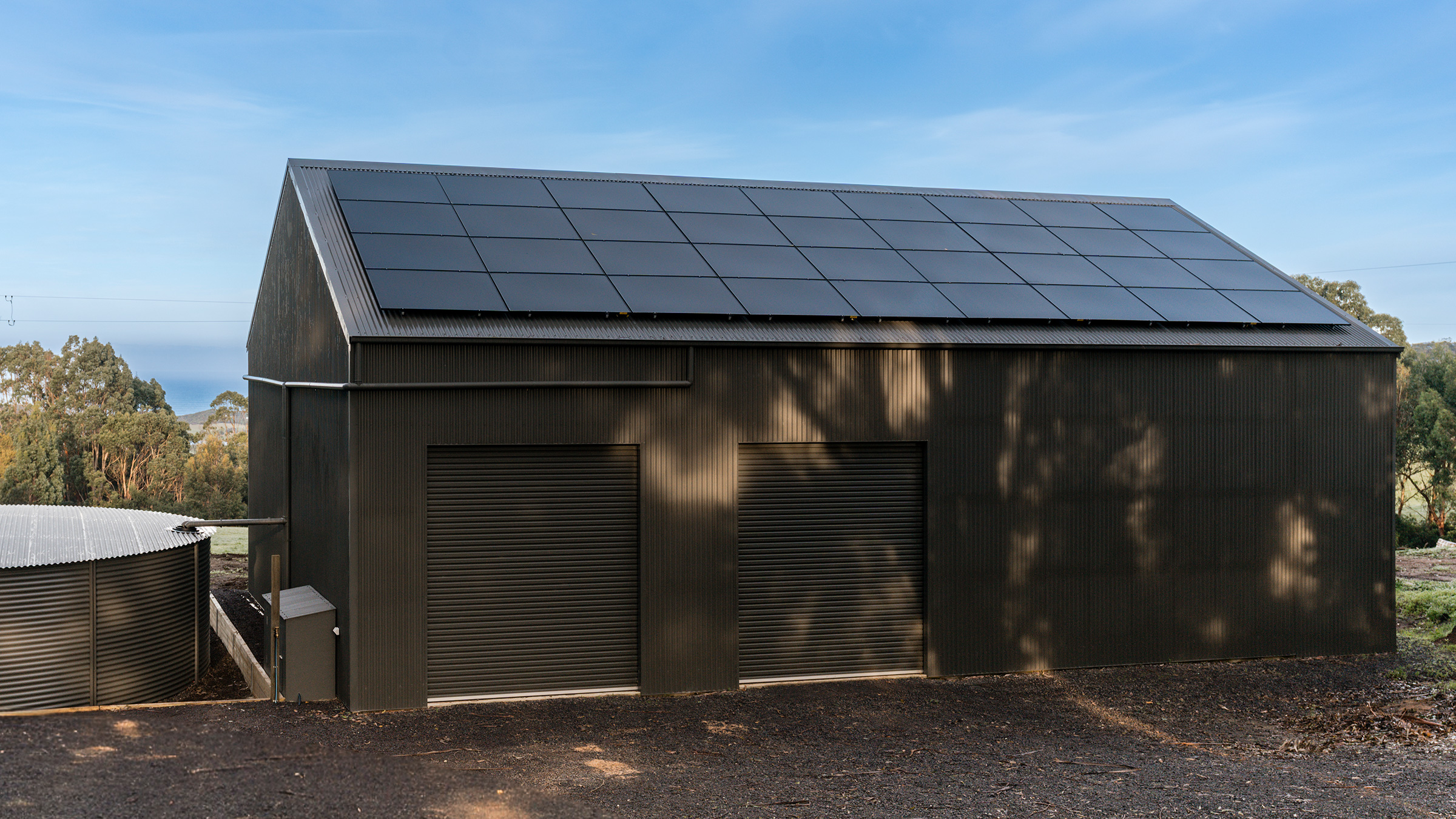
I installed 36 solar panels and 40kWh of battery storage. That sounds like more than enough to power a house, but our place isn’t exactly a normal house. We’re fully electric, we don’t have mains water and almost everything on the property relies on power. The house is also old, poorly insulated and full of places for warm air to escape. Then there’s the heating, hot water, workshop and a future EV to think about.
So, can a solar and battery system this big actually take us off grid?
Short answer: sometimes. Long answer: keep reading…
This article and accompanying video were produced in partnership with Anker SOLIX, who supplied the battery and inverter system and sponsored this series. AIKO supplied the solar panels featured in the project.
Our solar and battery system at a glance
- 36 × AIKO Neostar 3S54 475W solar panels
- 17.1kW total solar capacity
- 2 × Anker SOLIX X1 6kW hybrid inverters
- 8 × 5kWh Anker SOLIX battery modules
- 40kWh total battery storage
- 12kW combined inverter output
- Four independent solar inputs
- Whole-home blackout backup
- 63-amp single-phase grid connection
Designing for the home we’re building
We didn’t want to design the system around how the property operates today. We wanted to allow for where it might be in another two to five years. Our property has a 63-amp single-phase grid connection, and upgrading to three-phase wasn’t an option with the existing infrastructure in our street. Single-phase power isn’t necessarily a problem, but it limits how much electricity can move in and out of the property at once. This affects the inverter capacity, battery output and overall system design. The challenge was to build the best system we could within the connection we already had.
How much solar could we fit?
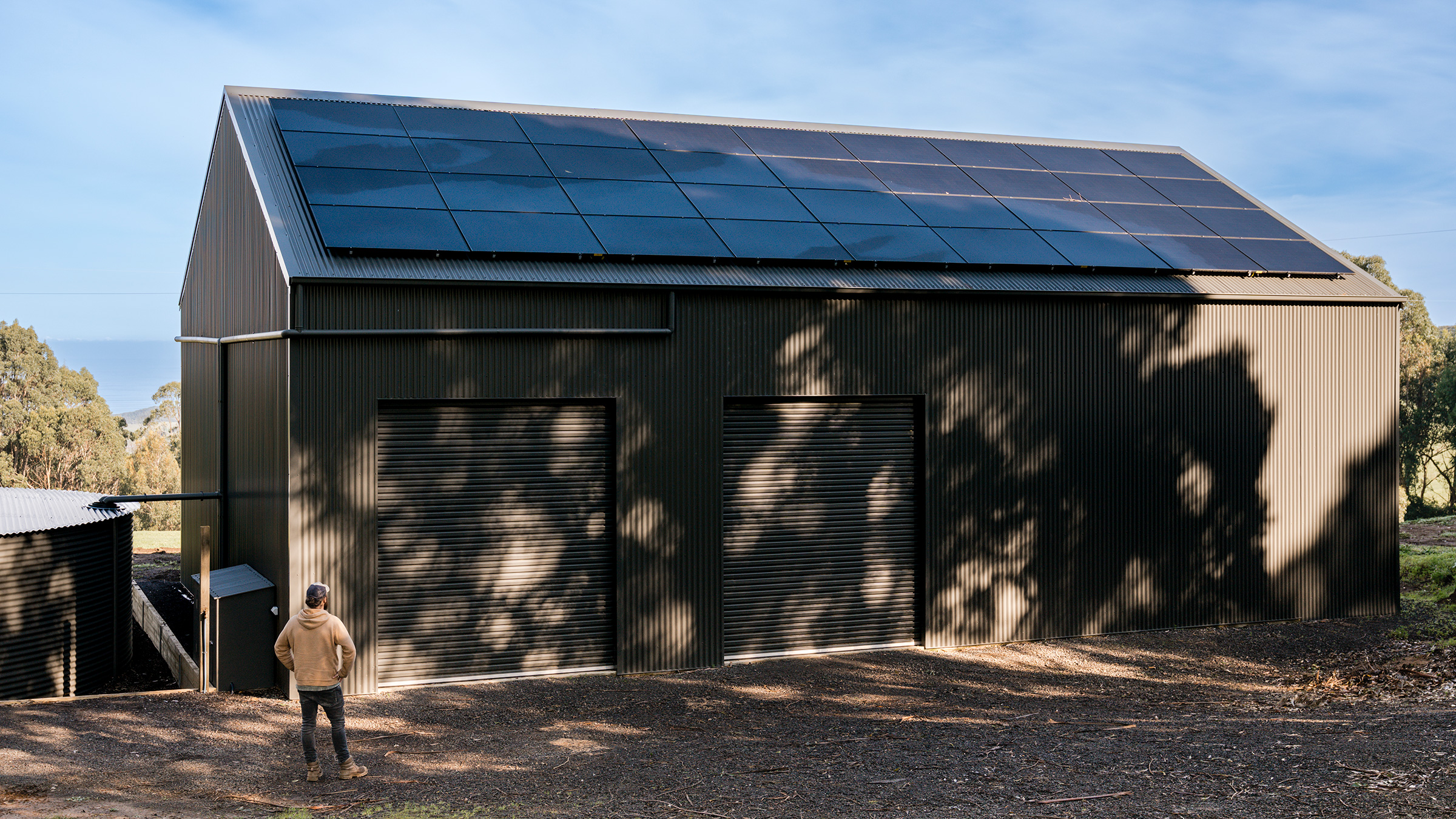
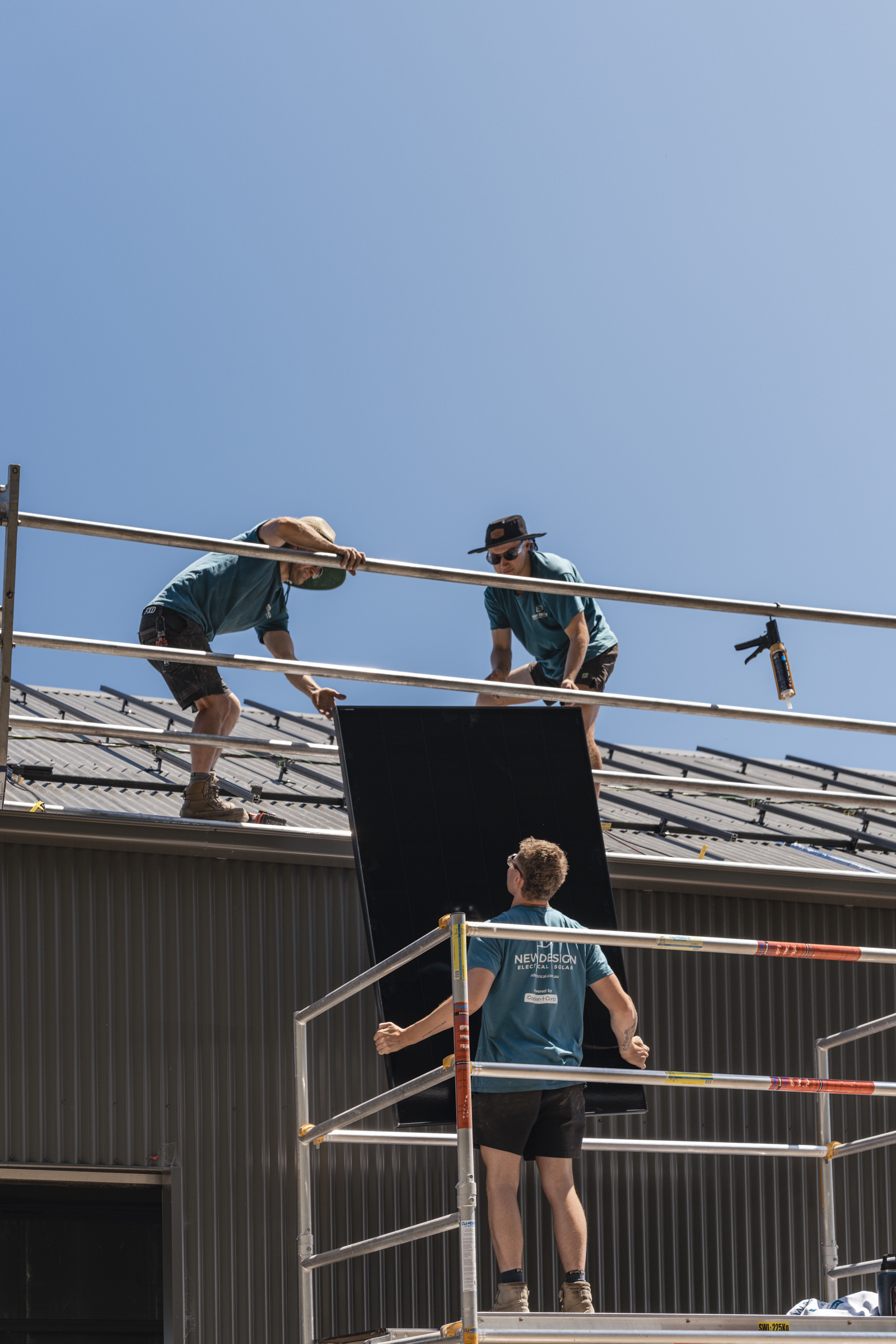
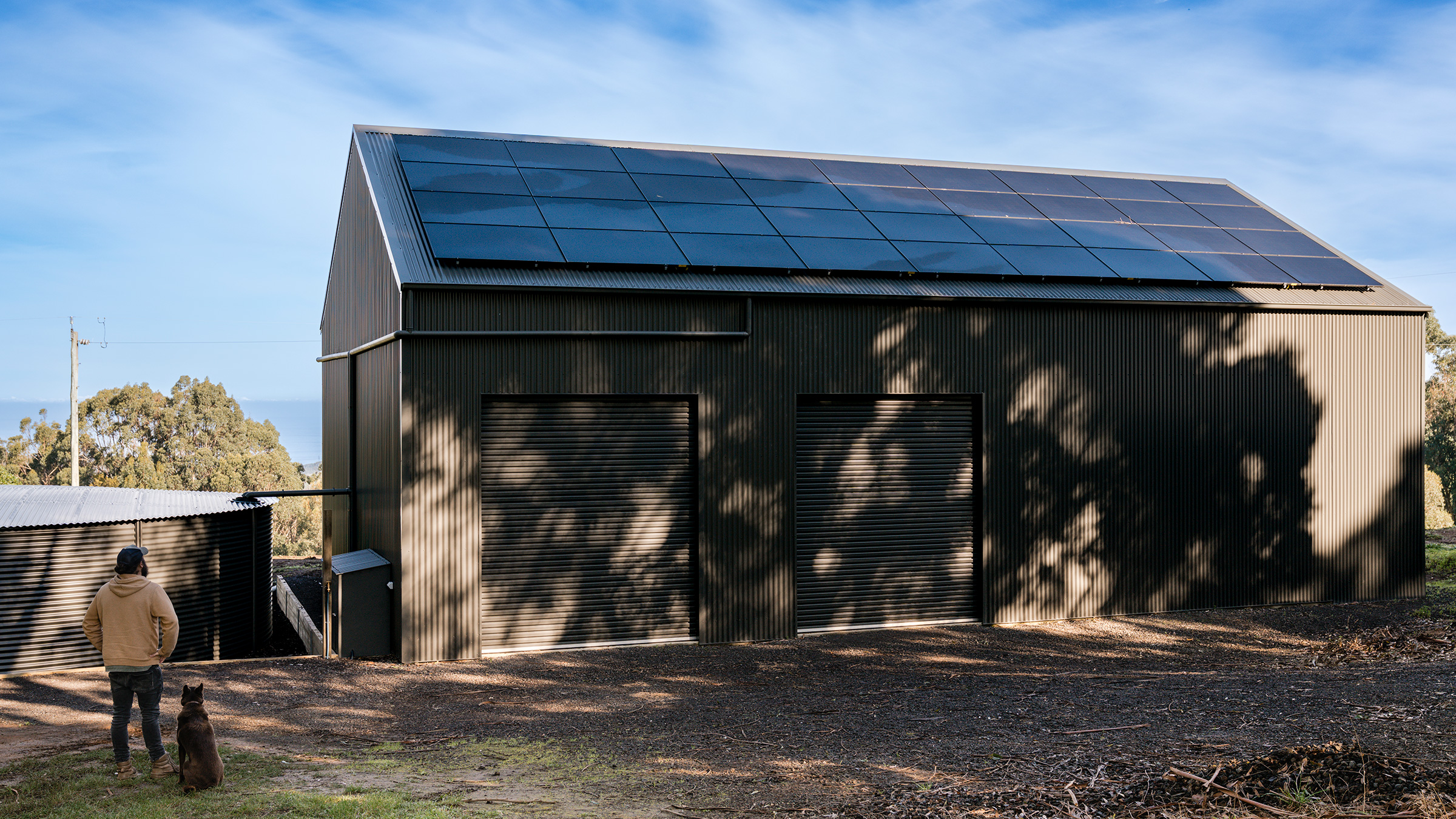
I designed the big shed with solar in mind. The long side of the roof faces almost directly north, so the next question was simple: how many panels could I fit up there? The answer was 36. We installed 36 AIKO Neostar 3S54 panels, rated at 475W each, giving us a total solar array of 17.1kW. They use N-Type ABC back-contact technology and achieve up to 23.8% module efficiency, helping us generate more power from the available roof space.
They’re also completely black. Black cells, black edges and no visible silver lines across the front. I built the shed to look good, so I wasn’t going to cover the roof with something that stuck out like a sore thumb. The technical performance mattered. The fact they looked good mattered too.
Why did we install two inverters?
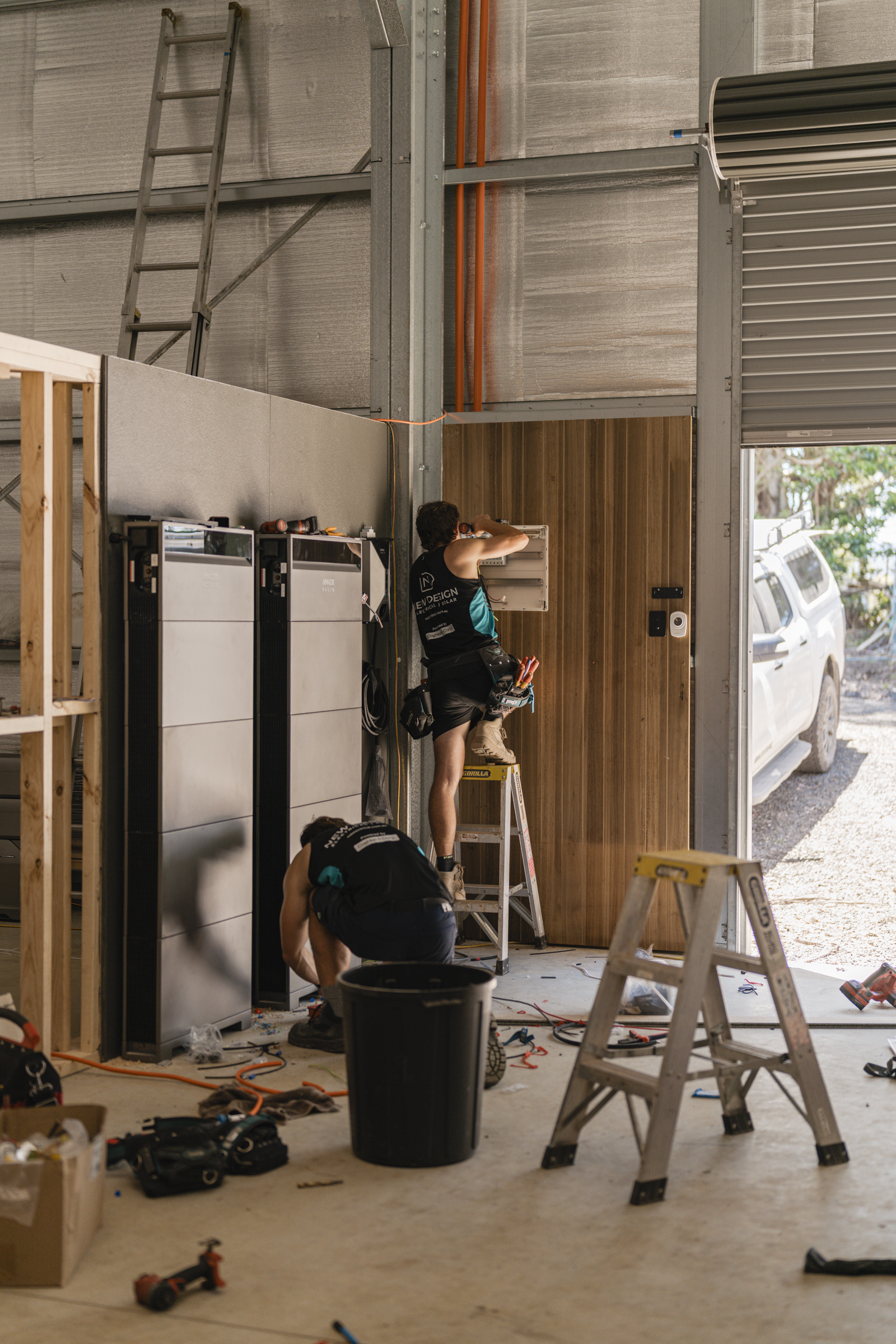
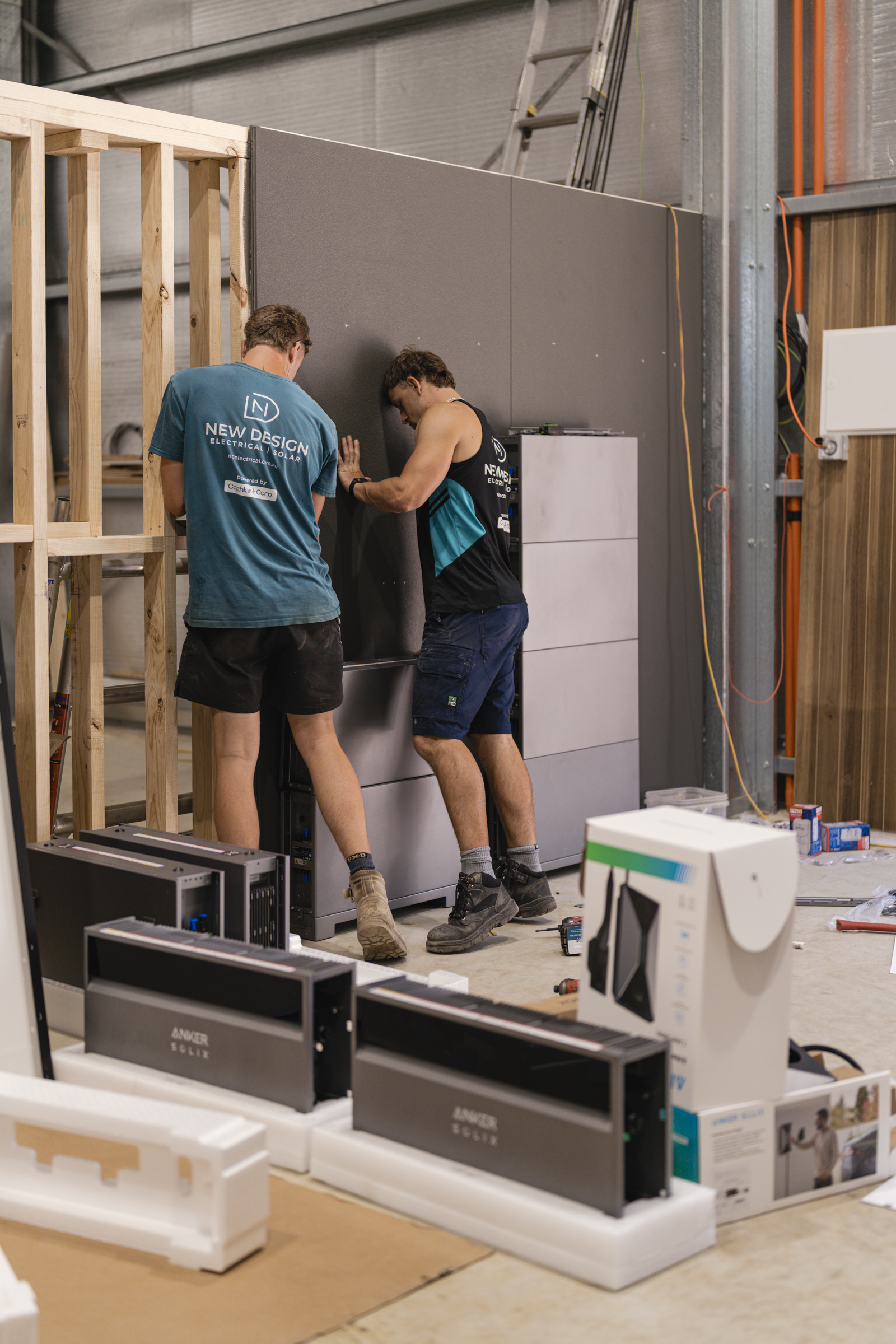
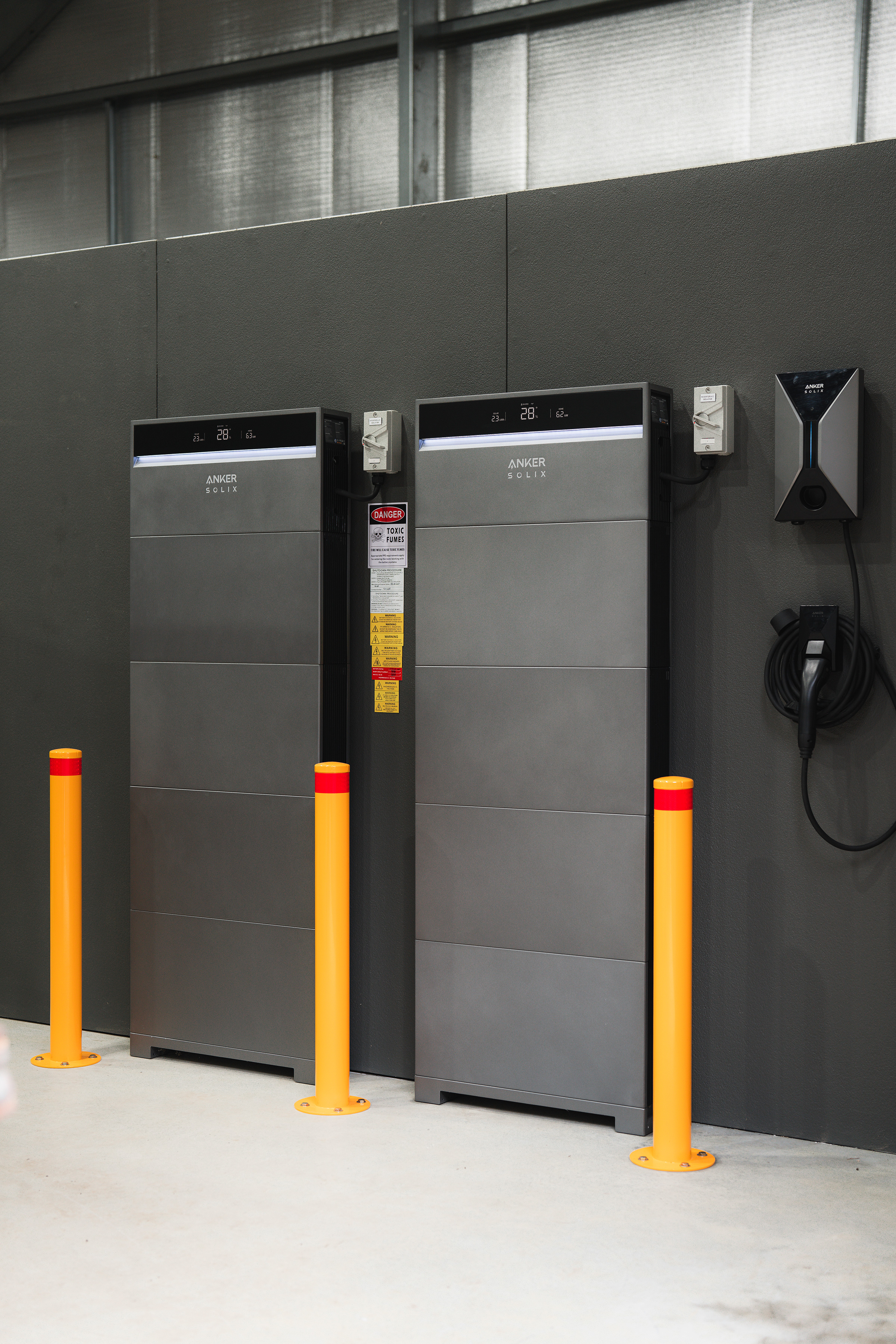
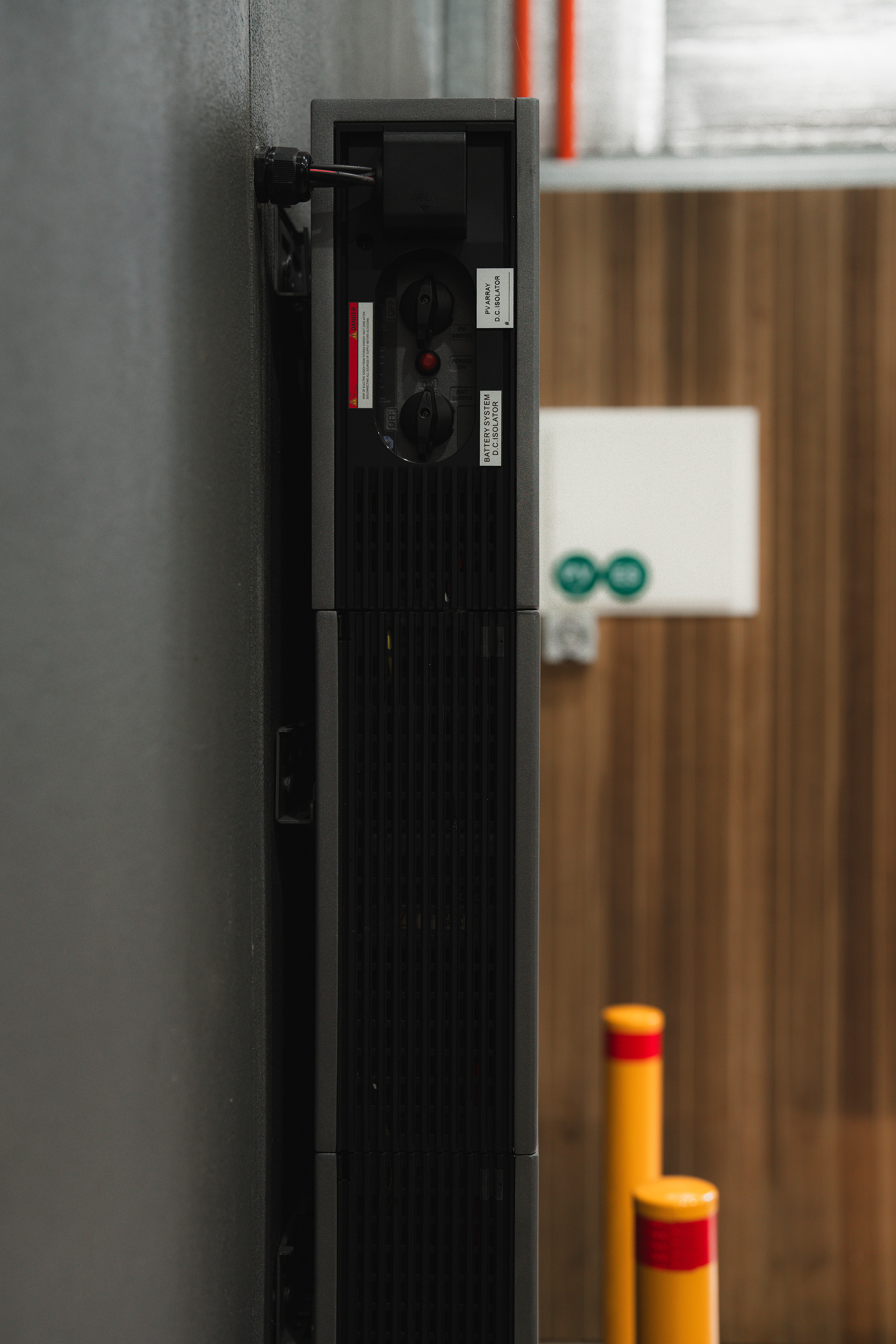
For storage, we installed two Anker SOLIX X1 battery stacks. Each stack has a 6kW inverter and four 5kWh battery modules, giving us 40kWh of storage and 12kW of combined inverter output. Each inverter provides two independent solar inputs. Using two gave us four inputs, allowing the 17.1kW array to be divided into four separate strings. If one section is shaded or producing less power, the other sections can continue operating independently. Linking the two 6kW inverters also provides 12kW of combined battery input and output. At 240 volts, that’s approximately 50 amps—close to the usable capacity of our 63-amp grid connection.
In simple terms, the batteries can deliver nearly the same level of power that we would normally draw from the grid. The system is modular too. If our requirements grow, we can add more battery capacity later without needing to replace everything already installed.
Why we chose AIKO panels
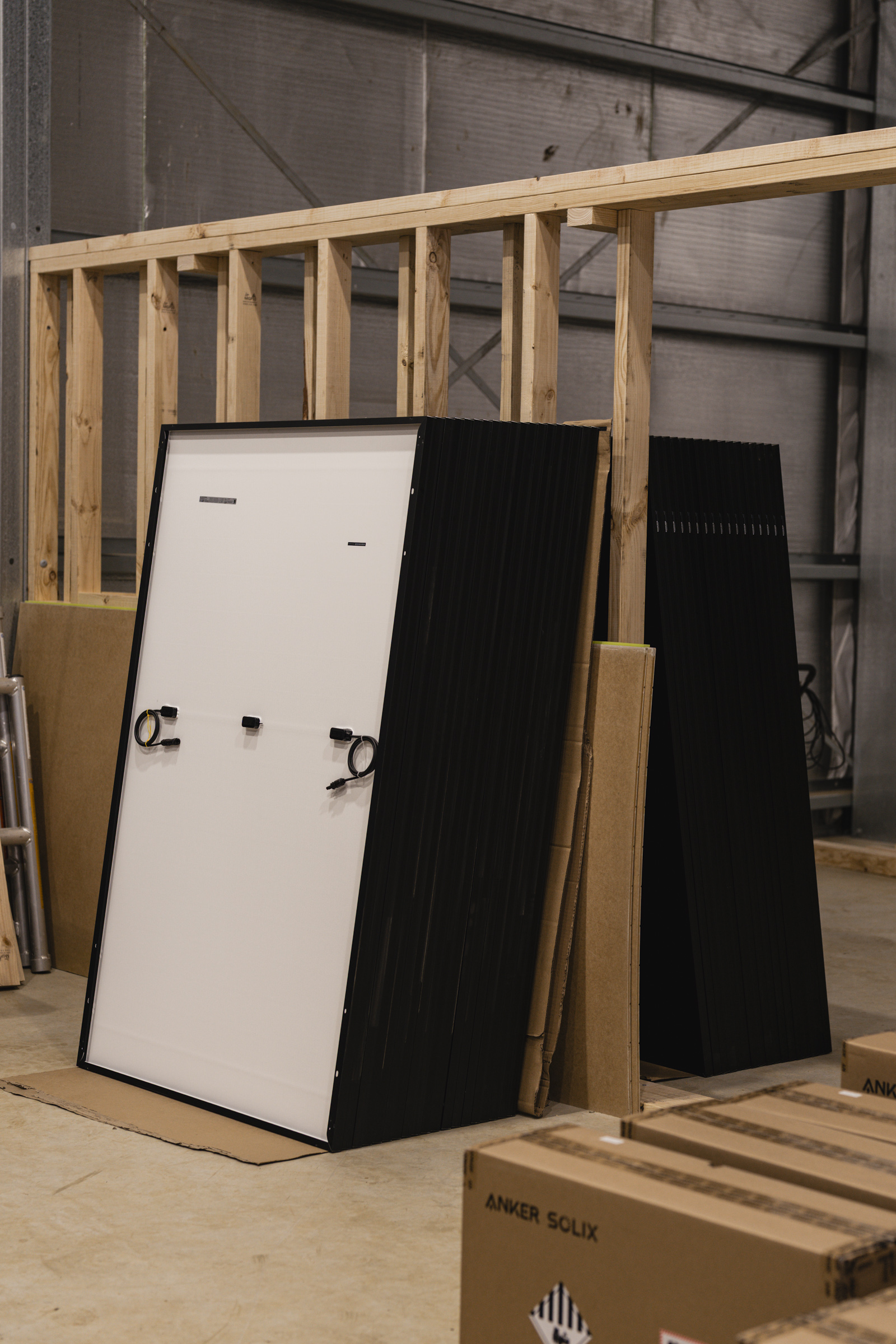
Solar panels can look fairly similar once they’re on a roof, but the technology behind them isn’t all the same. We installed 36 AIKO Neostar 3S54 panels, rated at 475W each, giving us a total solar array of 17.1kW. Because our roof space was fixed, power density mattered. These panels achieve up to 23.8% module efficiency, allowing us to fit more solar capacity into a typical residential panel footprint.
The panels use AIKO’s N-Type ABC—or All Back Contact—technology. Moving the electrical contacts to the back leaves the front surface clear, which contributes to both the higher power density and the clean, all-black appearance. That suited this project perfectly because I wanted to maximise the available roof while keeping the shed looking good.
There are longer-term benefits too. The panels are designed for improved performance under partial shading, a better temperature coefficient, high-temperature restriction and greater resistance to microcracks. Those features are particularly relevant here because parts of our array experience winter shading and the panels will spend decades exposed to changing coastal conditions.
AIKO backs the Neostar 3S54 with a 25-year product warranty and a 30-year performance warranty, with stated degradation of no more than 1% in the first year and 0.35% annually after that.
For me, the decision came down to getting more output from the roof, good real-world performance and an all-black panel that suited the shed. The technology mattered, but those were the practical reasons it mattered to us.
What happens during a blackout?
Power outages happen here all the time. The day before our whole-home backup installation was completed, the grid went down for around eight hours. We had no lights, no power for our laptops and no running water because the pumps also need electricity. Standard X1 installations include backup for selected essential circuits. Ours wasn’t connected because we were waiting for the Gateway needed for our whole-home backup setup.
With the Gateway installed, the entire house can continue operating from the batteries and available solar when the grid goes down. It doesn’t mean we have unlimited power, but the lights stay on, the water keeps running and I no longer need to drag extension leads around the property. Game changer.
How does it perform in the real world?
Summer is easy. On a sunny day, the solar array charges the batteries quickly while powering the house. During January, February, March and April, our electricity costs were effectively reduced to the daily grid connection charge.
Winter is where things get interesting. On heavily overcast days, the array might generate only 8–15kWh across the entire day. The house also consumes an enormous amount of energy because it has almost no insulation and we like to keep it warm. We have wall heaters, split systems and a conventional electric hot-water service that draws approximately 4.5kW whenever it reheats. Every bath for the kids creates a very obvious spike in the energy graph.
During winter, the batteries don’t always last through the night. We maintain a 20% reserve for blackouts and still draw some electricity from the grid overnight and early in the morning. We’ve also moved to an electricity plan with a free daytime charging period. If there isn’t enough solar, the batteries can charge from the grid during those free hours.
Did the system take us off grid?
Not completely.
In summer, we can go for long periods while drawing almost nothing from the grid. In winter, we still rely on it—particularly overnight and during extended cloudy weather. The biggest problem isn’t the solar or battery system. It’s the house.
Several trees shade parts of the array during winter, and the house itself is terribly inefficient. Until we insulate, seal and reclad it, heating will continue to consume far more electricity than it should. Once those jobs are finished, I think we could generate around 95% of our annual electricity through the solar and battery system. We’ll remain connected to the grid, but we shouldn’t need to rely on it very often.
What did I learn?
Solar is more complicated than I expected. The panels are only one part of the equation. Your grid connection, roof orientation, shading, inverter capacity, battery output, backup requirements and future plans all need to work together.
If you’re considering a similar system, get multiple quotes, ask plenty of questions and request a clear plan showing where the panels will go and how the system has been sized for your home.
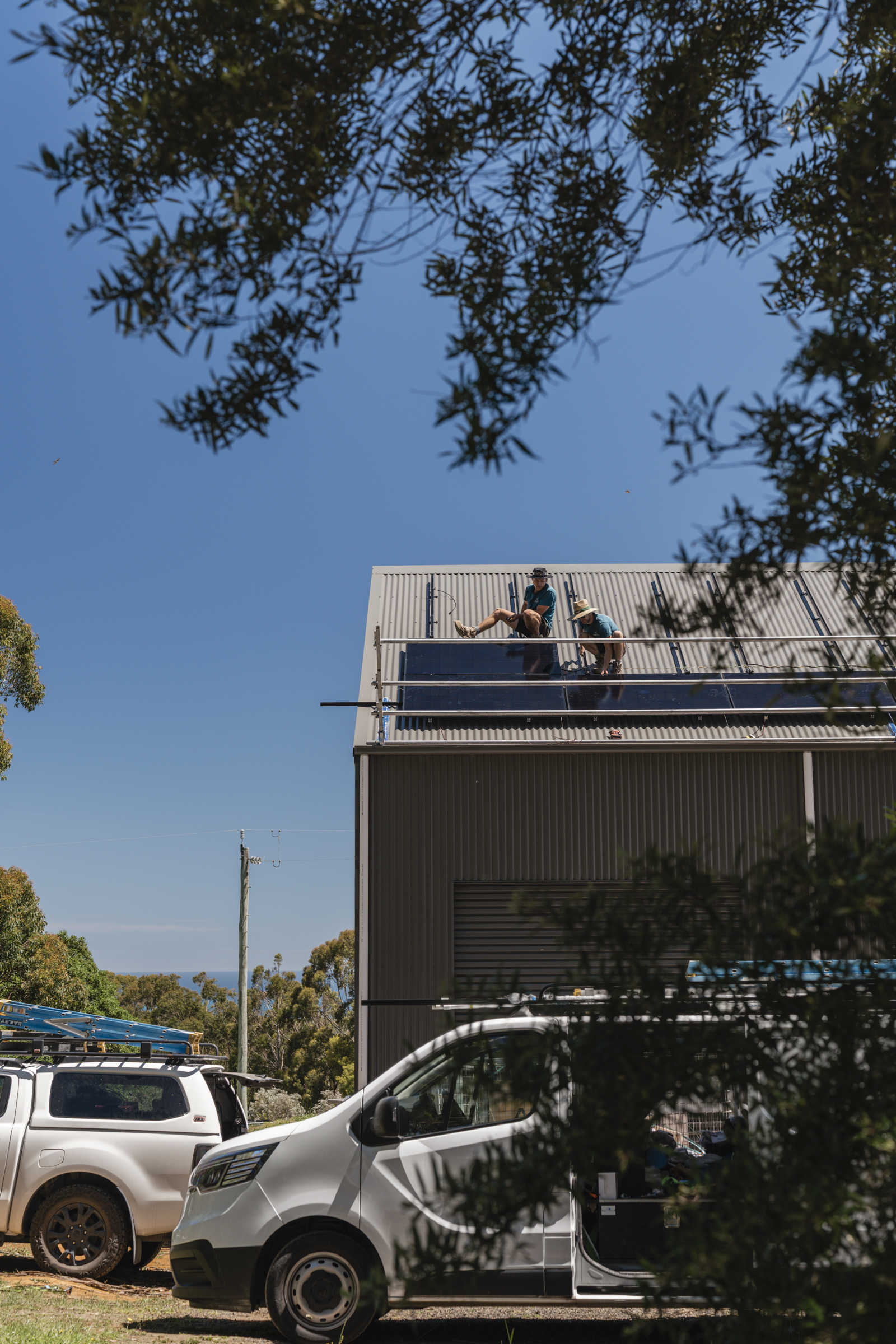
All electrical design, wiring, connections and commissioning must be completed by licensed electricians. I helped with the planning and non-electrical preparation, but the electrical work itself was handled by professionals.
Did 36 solar panels and 40kWh of batteries get us off grid?
In summer, pretty much. In winter, not yet.
Now I just need to fix the house!
If you’re in Vic, here are the team who put this all together for us.
Quotes & Install By: Specialized Solar
Electrician On Site: New Design Electrical