
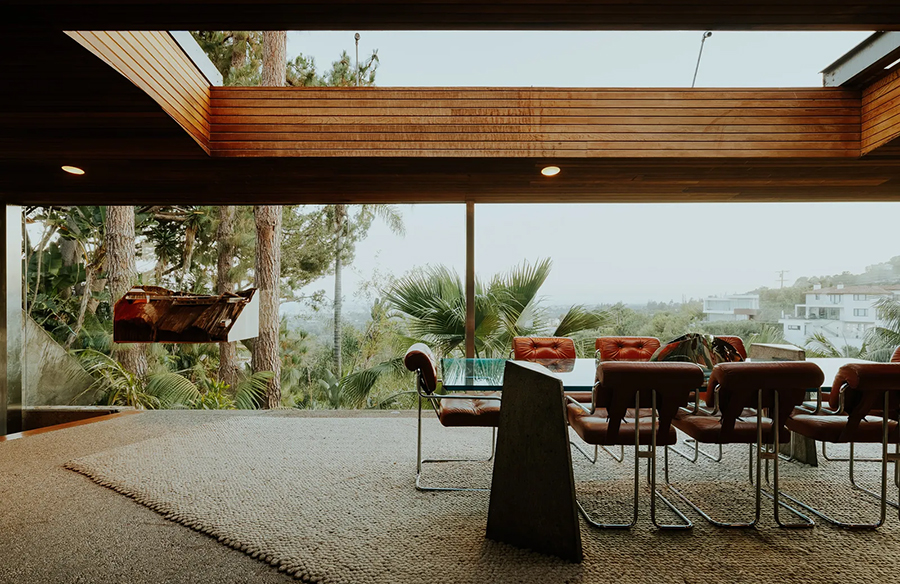
You have probably heard the term Mid-Century Modern. It is everywhere. Furniture stores use it. Designers reference it. Architects love it. And chances are you’ve come across it more times than you even realise. Homes filled with natural light, warm rich timbers, clean refined lines and flexible furniture. But why are we still so obsessed with a design movement that emerged more than 70 years ago?
Most styles have their moment, then something new comes along and we all move on. Mid-Century Modern should have followed that same path. In fact, for a while, it did. But by the 1970s and 80s, its restrained lines and practical approach started to feel a bit cold, a bit ordinary and, dare I say, a bit unfashionable.
Then it came back. Big time. Watch below to chart Mid-Century Modern’s rise, fall and epic comeback…
The thing is, Mid-Century Modern was never really about creating a ‘look’. The term itself wasn’t even coined until decades after the movement had begun. The architects and designers behind it were not trying to create a particular aesthetic. They were trying to solve real problems.
After the Second World War, people were returning home, starting families and building new lives. There was a housing boom and a feeling of optimism about what the future could look like. Designers began asking different questions: how can a home work better? How can it be more affordable? How can it feel lighter, more flexible and more connected to the world outside?
Those questions shaped everything.
Homes opened up.
Large expanses of glass windows replaced smaller enclosed rooms.
Flat or low-pitched rooflines and
Open-plan living and indoor–outdoor connections became part of a new way of thinking.
Natural materials like timber, brick and stone were used alongside man-made elements like steel, glass, chrome. With new manufacturing technologies like moulded plywood, fibreglass and tubular steel.
Furniture design changed too. Pieces became lighter, more comfortable and designed around the human body. Charles and Ray Eames, George Nelson and Arne Jacobsen created furniture that still feels incredibly modern today.
By the 70s and 80s however, people wanted something different. Interiors became softer, bolder, more decorated and much more expressive. Mid-Century Modern had also become so widely mass-produced that it lost some of the freshness that made it exciting in the first place. But in the 90s, people started looking back.
After years of doilies, heavy decoration and corporate glamour, the simplicity of Mid-Century Modern suddenly felt refreshing again. Vintage collectors started hunting for original pieces. Designers brought iconic furniture into contemporary homes. Brands began reissuing the designs that had once been discontinued. Then Mad Men arrived and made walnut timber, contoured chairs and refined MCM interiors feel cool all over again.
And here we are. Twenty odd years later and dare I say the term Mid-Century Modern is now wildly overused. There are plenty of replicas. And yes, perhaps some of the furniture has lost a little of its magic through sheer overexposure. But I do NOT think we keep coming back to Mid-Century Modern because of a particular chair or colour palette. I think we keep coming back because the thinking behind it is still relevant.
We still want homes filled with natural light. We still want spaces that feel calm rather than cluttered. We still need rooms to work harder, especially as homes get smaller and life gets busier. We still want to feel connected to nature, to buy fewer better things and to create homes that feel good to live in.
That is the real reason Mid-Century Modern has lasted. The style has evolved. The colours have changed. Our homes look different now. But the ideas underneath are still exactly what so many of us are looking for, and the real reason we can’t quit Mid-Century Modern.